PROPEL Explained
The purpose of PROPEL
The PROPEL program was developed to make research, teaching, and work-study opportunities transparent and equitable. Read more about the PROPEL mission, history, and the team in About Us.
How does PROPEL work?
PROPEL works in rounds timed in accordance with the semesters, ADD/DROP deadlines and registration. There are distinct phases to each round: project posting, student application and application review
- Mentors post projects to the website.
- After the project posting date closes, students can apply for positions.
- After the student application period closes, mentors can review the applications, interview students, and offer the position. In the
- After the application review phase closes, an email is sent notifying students they have been accepted or declined for the position.
When are the PROPEL periods (Rounds) for posting and applying to opportunities?
For future PROPEL rounds see - https://propel.umass.edu/rounds
What projects were available in the past? Here is a list
2025-2026 Projects with Mentor Department
Department - Project Name:
Round 1
CHEM - Looking for one UG TA for Chem261-Fall25
Kinesiology - Undergraduate Research Assistant: Brain Health & Physical Activity Intervention (SITLess4Brain Lab)
BME - Using CRISPR/Cas9 and other genomic tools to study genes in host-microbe mutualism
BME - Dragon Tending: Hands-On Management of On-Campus Biodigesters
BME - Biogas Lab Research: Renewable Energy from Organic Waste
MIE - Segmentation and Quality Analysis of OCT Images for Kidney Evaluation
BIO - General Genetics Lab (BIO384; previously BIO284) Undergraduate Teaching Assistants (SP26)
BMB - Identifying chemicals (terpenes) and their roles in plants
BIO - Visual circuit development & plasticity in diurnal & nocturnal rodents
BIO - Using rodent phylogeny to teach principles of evolutionary biology
BIO - Bio 153 Phage Discovery Undergraduate Teaching Assistant Fall 2026
BIO - Can plants feel touch?
BIO - PROPEL Research Fellows
BIO - uTA for Ecology (Bio 287) TuTh 1:00-2:15 PM
CEE - PFAS Water Quality Modeling and Tracking Nutrients in the Mill River
CHEM - Photochemistry of Coffee
CHEM - Personal Design Project
BIO - Discovering How DNA Binding Sites Control Plant Growth
STOCK - Plant-fungal symbioses & soil nutrient cycling (paid or credit)
PBS - Image analysis and quantification of glial cell development in mice
CHEMENG - Sustainable olefin production
BIO - Research about how sea slugs process smells
BIO - Help create a nudibranch brain connectome
ECO - Freshwater Mussel eDNA Laboratory Processing & Meta-analysis
ECO - Freshwater Mussel Fieldwork at a Dam Impoundment in MA
ECO - Remote Trail Camera Imagery Review and Freshwater Mussel Meta-analysis
ECO - Juvenile River Herring Outmigration and Bycatch Video Analysis
ECO - Juvenile River Herring Camera Trap Image Analysis
ECO - Zooplankton Identification and Measurement
ECO - Juvenile River Herring Age and Growth (Otolith Analysis)
ECO - Juvenile River Herring Otolith Extraction and Mounting
PBS - Psychology - Adoption & Foster Care Research Reading Group Fall 2025
PBS - Psychology - Learning Lab Undergraduate Research Assistant
ECO - Literature Search/Data Extraction for Freshwater Mussel Meta-analysis
EGCS - Forested Wetland Studies: Atlantic White Cedars and Water Quality
EGCS - Wetland Waters: Metrics and Methods
BIO - Work Study Employment - Lab Assistant for Biology's Teaching Labs in the ISB
MIE - Data Triangulation to Explore the Information Value in Different Healthcare Data Sources
MICRO - Studying Fungal Chemotaxis and Morphogenesis in Lab-on-a-chip
EnHealth - Using zebrafish to understand the developmental origins of disease
BIO - Cell Biology of the Nucleus research position for credit during semester and paid during the summer
Round 2
Kinesiology - Undergraduate Research Assistant: Brain Health & Physical Activity Intervention (SITLess4Brain Lab)
STOCK - Mycological and bacteriological culture collection
STOCK - Vineyard Science & Practice: Plant Physiology, Pruning, and Sustainable Grape Production
MICRO - Developing Antifungal Resistance in A. fumigatus Strain
BIO - Social media intern
BIO - BIO 548 (Moscarella/Doyle) Undergraduate Teaching Assistants for Spring 2026
BIO - BIO 311 (Moscarella) Undergraduate Teaching Assistants for Spring 2026
MICRO - How Microbes Feed the Soil: Tracing Carbon from Dead Microbial Biomass
MICRO - Microbial Conversion of Lignin into Biodegradable Plastics
BIO - Climate, Microbes, and Medicine: Discovering Antimicrobials in Warming Forest Soils
BIO - Bio151 (Francis) Undergraduate Teaching Assistantship Spring 2026
BIO - Bio586 Cell Biology of Disease Undergraduate Teaching Assistant Sp26
BIO - Bio 153 Phage Discovery Lead UTA/Floater Fall 2026
BIO - Bio 153 Phage Discovery Undergraduate Teaching Assistant Fall 2026
BIO - Chromosome Research: Yeast Genetics and Imaging Data Analysis
BIO - Zebrafish Feeding and Maintaining Transgenic Lines
BIO - Zebrafish Neurodevelopment
BIO - Undergraduate TA - Introductory Biology II (BIOL 152) - Spring 2026 - Dr. Lonthair
SOC - Reimagining Justice Lab
BIO - Territoriality and Vocal Communication in Chipping Sparrows
PBS - Shifting moral values amid the war in Ukraine
BME - GPU Accelerated Computational Fluid Dynamics
BIO - Spring 2026 Cell & Molecular Bio (BIO285) Undergraduate TAs (Raimer)
BIO - Fall 2026 General Genetics (BIO311) Undergraduate TAs (Raimer)
PBS - Exploring Cognition with Mathematical Models
BIO - Bio 282 Phage Bioinformatics Undergraduate Teaching Assistant for Fall 2026
BIO - Lab Prep staff, Bio 153 (Spring 2026)
BIO - Work Study Employment - Lab Assistant for Biology's Teaching Labs in the ISB
BIO - BIOL 152 & BIOL 110 (Zehnder) Undergraduate Teaching Assistants for Spring 2026
MIE - Research opportunities in design optimization + ML
BIO - Undergrad TA | BIOL 285 | Spring 2026 | Dr. Spracklen
PBS - Rearing environment and brain volume in jumping spiders
ECO - undergraduate TA positions for ENVIRSCI 214
BIO - General Genetics Lab (BIO384; previously BIO284) Undergraduate Teaching Assistants (SP26)
BIO - BIO151 Undergraduate Teaching Assistants (Cass; FA26)
BIO - Undergraduate TA - Physiology (BIOL 288) - Fall 2026 - Dr. Lonthair
POLY - Chemical Upcycling of Polymers: Creation on Novel Polyolefins
Round 3
MIE - Research opportunities in design optimization + ML
CHEMENG - Polymer degradation in Fuel Cells
CHEMENG - Understanding Configurational Changes in Drug Molecules
PHHS - Quantifying Physical Activity Dose within Applied Behavior Analysis Therapy for Autistic Youth
BIO - Diversity and Evolution of Armored Scale Insects
CEE - PFAS Water Quality Modeling and Tracking Nutrients in the Mill River
BIO - Hierarchies of clonal ants with and without status signals
EnHealth - Using zebrafish to understand the developmental origins of disease
BIO - Genetic diversity of migratory shorebirds
BIO - Insect Collection Curatorial Assistantship
BMB - Unravelling terpene metabolism
Plant BIO - Plant Pathogen Fungicide Resistance Screening & Genetics
STOCK - Paid Undergraduate Science Communication Opportunity: Grape Notes Viticulture Newsletter
BIO - BioTAP Peer Mentor 2026-2027
ECO - Climate Smart Pollinator Habitat
MIE - Seeking Undergraduate Researchers for Human Factors Projects
Round 4
Nursing - Summer Research Assistants for Plant-Based Teaching Kitchen and Lab
Kinesiology - Undergraduate Research Assistant: Brain Health & Physical Activity Intervention (SITLess4Brain Lab)
STOCK - Fertility Management in High Organic Matter System
STOCK - Evaluation of New Northern Highbush Blueberry Varieties for Sustainable Field Production in Mass
Nursing - Transforming Telehealth: An Intervention to Reduce Inequality
BIO - Can plants feel touch?
POLY - Provisional oxygen storage/release system
BIO - Research Opportunities: Restoring Brain Function in Aging
Health Promotion & Policy - Research Assistant Position with the Quality for All Lab
BIO - Bee ecology; summer lab manager and research assistant positions
Round 5
Department - Project
BIO - BIO564 - Human Physiology: Undergraduate Teaching Assistant - Fall 2026
BMB - Unravelling terpene metabolism
PBS - Learning Lab Research Assistant
PBS - Research Reading Group - Foster Care & Adoption Focus
CHEDU - The Public Health Equity Young Scholars Summer Enrichment Program
MATH - Develop project material for intro to data science course
PBS - Scoping review: Learning about disability through media
BIO - BIOS Mentors - Summer 2026 - Phillis
BIO - BIOL 151 Undergraduate TA (Randall Phillis)
PBS - Learn about sleep and memory in the Somneuro Lab! Summer & Fall Positions available
STOCK - Sustainable grass sports fields: establishment + maintenance (Fall 2026)
Biostats - Long-term Tick Surveillance in Western Massachusetts
PBS - Individual Differences in Development Lab, Psych and Brain Sciences
BIO - Work Study Employment - Lab Assistant for Biology's Teaching Labs in the ISB
PBS - New hormonal therapy and Alzheimer's neuropathology
LRC - LRC Supplemental Instruction Program
BIO - Natural History Outreach and Exhibit Design
SOC - Reimagining Justice Lab
BIO - Bio285 (Francis) Cell/Mol Biology Undergraduate Teaching Assistant F26
BIO - Bio 288 Physiology Undergraduate TA Fall 2026 - Dr. Rocheleau
BIO - Bio161H Quant Biology of the Cell Undergraduate Teaching Assistant F26 (Francis)
BIO - Undergraduate TA - Physiology (BIOL 288) - Fall 2026 - Dr. Lonthair
STOCK - Evaluation of New Northern Highbush Blueberry Varieties for Sustainable Field Production in Mass
STOCK - Fertility Management in High Organic Matter System
MIE - Seeking Undergraduate Researchers for Human Factors Projects
BIO - Biology LEAD Program
BIO - BIOL 151 (Moscarella) Undergraduate Teaching Assistants for Fall 2026
BIO - BIO 151 (Zehnder) Undergraduate Teaching Assistants for Fall 2026
PBS - RA in RDCL: Reasoning, Decision making, and Computational modeling Lab
MIE - Developing hydrogel systems for brain organoid culture
BIO - UTA for Bio151 With Rounds
BIO - Fall 2026 General Genetics (BIO311) Undergraduate TAs (Raimer)
BIO - Bio 282 Phage Bioinformatics Undergraduate Teaching Assistant for Fall 2026
BIO - Bio 153 Phage Discovery Lead UTA/Floater Fall 2026
BIO - Bio 153 Phage Discovery Undergraduate Teaching Assistant Fall 2026
STOCK - UMass Carbon Farming Initiative: Growing Climate Smart Agriculture
BIO - General Genetics Lab (BIO384; previously BIO284) Undergraduate Teaching Assistants (SP26)
BIO - BIO151 Undergraduate Teaching Assistants (Cass; FA26)
2024-2025 Projects with Mentor Department
Department - Project Name:
BIO - Adler lab; Pollination Ecology
CEE - AquaPhos - Pollutant removal and resource recovery to clean our ponds
PBS - Autistic Adolescent Social Support and Quality of Life
PBS - Automation and validation software for behavioral tracking in mice
BIO - Bio 153 Phage Discovery Lead UTA/Floater Spring 2025
MICRO - Cell Cycle Localization of DNA Polymerase IB in African trypanosomes
MICRO - Cell Cycle Localization of DNA Polymerase IB in African trypanosomes
PBS - Cultural Neuropsychology - Research Assistants needed (virtual work)
MIE - Data Mapping for Food Insecurity Analysis
MATH - Develop learning material for intro to data science course
BIO - Discover New NEON Terrestrial Giant Viruses and Virophages
BIO - Discover New NEON Terrestrial Giant Viruses and Virophages
BIO - Diversity and Evolution of Armored Scale Insects
BIO - Diversity and Evolution of Armored Scale Insects
MIE - Empowering Wearable Health Tech: Robust Electrical Interfaces for Next-Gen Soft Electronics
MICRO - Evaluating the role of p38 in parasite-perturbed endothelial cells
STOCK - Evaluation of Raspberry Cultivars in Soilless Production in High Tunnels
STOCK - Explore Viticulture: Pruning, Training, and Sustainable Management
STOCK - Exploring the Impact of Vineyard Management on the Rhizosphere and Root Microbiome
EGCS - Forested Wetland Studies: Atlantic White Cedars and Water Quality
BIO - General Genetics (BIO311) Undergraduate Teaching Assistants (FA25)
BIO - General Genetics (BIO311) Undergraduate Teaching Assistants (SP25)
BIO - General Genetics Lab (BIO284) Undergraduate Teaching Assistants (FA25)
BIO - General Genetics Lab (BIO284) Undergraduate Teaching Assistants (SP25)
STOCK - Grafting technology on pepper productivity in controlled environment
CHEMENG - Green Urea Production via Electrocatalytic C-N Coupling
BIO - Help create a nudibranch brain connectome
BIO - Help pioneer CRISPR genome editing in a new (and very weird) fungal organism
BMB - Identifying chemicals (terpenes) and their roles in plants
PBS - Individual Differences in Development Lab, Psych and Brain Sciences
STOCK - Influence of agricultural management on the ecology of nematodes in vineyards of New England
BIO - Insect Collection Curatorial Assistantships
BIO - Introductory Biology Lecture BIO110 (for non-majors) Undergraduate Teaching Assistants
MICRO - Investigating host interactions with the mycobacterial cell envelope
BIO - Lab Prep staff, Bio 153 (F25)
ECO - Literature Search/Data Extraction for Freshwater Mussel Meta-analysis
BIO - Looking for 4 Undergraduate Teaching Assistants (UTAs)
PBS - Mapping myelination patterns across the lifespan
ECO - Microscope and genetic work for freshwater mussel conservation
STOCK - Mycological and bacteriological culture collection
BIO - Natural History Outreach and Exhibit Design
CEE - NSF FMRG: Carbon-inverted manufacturing of inverted cements (CIMIC)
BIO - Nurturing the wetland forest, nature’s water filter
CHEM - Personal Design Project
BIO - Phage DNA Extraction mini-project, May 19-30, 2025
CEE - PhosForUs - Piloting biofilm system to remediate polluted waters
CHEM - Photochemistry of Coffee
BIO - Primate Stem Cell Culture and Gene Expression
MIE - PROPEL project: 3D Light Printing and its Biomedical Applications
BIO - PROPEL Research Fellows
BIO - PROPEL Research Fellows
PBS - RA in RDCL: Reasoning, Decision making, and Computational modeling Lab
STOCK - Reducing pesticide and bird damage in sustainable vineyards
BIO - Research about how sea slugs process smells
PBS - Research Assistant - UMass Language, Intersensory Perception, and Speech (LIPS) Lab
PBS - Research Assistant, UMass Eyetracking Lab
MICRO - See and study how microbes behave in small spaces using Lab-on-a-chip
MIE - Seeking Students for Transportation Safety/Human Factors Projects
MIE - Seeking Undergraduate Researchers for Human Factors Projects
BIO - Setting Up for Discovery: Lab Preparation for Cognitive/Brain Aging Research
MIE - Several Projects with a Focus on Experimental Fluid Mechanics
PBS - Social processes and health psychology lab
PBS - Somneuro Lab Research Assistant
MIE - Summer internship in Srimathveeravalli Research Group
PBS - Systems neuroscience and behavior
BIO - Territoriality and Vocal Communication in Chipping Sparrows
BIO - The Biology of Dodder Host Preference
MICRO - Ticks and tick-borne diseases
ECO - Undergraduate Research: Literature Review on Tribal Forest Owners
BIO - Undergraduate TA - Introductory Biology II (BIOL 152) - Spring 2025 - Dr. Lonthair
BIO - Undergraduate TA - Physiology (BIOL 288) - Fall 2025 - Dr. Lonthair
BIO - Undergraduate TA - Physiology (BIOL 288) - Spring 2025 - Dr. Lonthair
BMB - Using CRISPR/Cas9 and other genomic tools to study genes in host-microbe mutualism
BIO - Using CRISPR/Cas9 genome editing to study the gene regulation in plant
BIO - Using CRISPR/Cas9 genome editing to study the gene regulation in plant
BIO - Using rodent phylogeny to teach principles of evolutionary biology
PBS - Using transgenic mice to explore glial mechanisms of addiction
PBS - Using zebrafish to understand the developmental origins of disease
BIO - UTA for Bio151 or Bio 152 with Rounds
BIO - Visual circuit development & plasticity in diurnal & nocturnal rodents
PBS - ViTAL Lab Research Assistant
CEE - Water quality and hydrologic patterns of Lake Warner Mill River basin
EGCS - Wetland Waters: Metrics and Methods
BIO - Work Study Position - Biology Teaching Lab Support Technician
BIO - BIO 151 (Moscarella) Undergraduate Teaching Assistants for Fall 2025
BIO - BIO 151 (Zehnder) Undergraduate Teaching Assistants for Fall 2025
BIO - Bio 153 Phage Discovery Undergraduate Teaching Assistant Fall 2025
BIO - Bio 153 Phage Discovery Undergraduate Teaching Assistant Spring 2025
BIO - Bio 153 Phage Discovery Undergraduate Teaching Assistant Spring 2025
BIO - Bio 282 Phage Bioinformatics Undergraduate Teaching Assistant for Fall 2025
BIO - Bio151 (Francis) Undergraduate Teaching Assistantship Spring 2025
BIO - BIO151 Undergraduate Teaching Assistants (Cass; FA25)
BIO - BIO151 Undergraduate Teaching Assistants (Cass; SP25)
BIO - Bio161H Quant Biology of the Cell Undergraduate Teaching Assistant F25
BIO - Bio285 Cell and Molecular Biology Undergraduate Teaching Assistant F25
BIO - Bio586 Cell Biology of Disease Undergraduate Teaching Assistant Sp25
PROPEL Application FAQs
How often should I check this site for projects?
During each of the five rounds, new projects will be continually posted from the first day of Project Posting to the "First day to apply for projects," no new projects are added after that date.
What does "Fields of Study" mean?
"Fields of Study" refers to the majors that are relevant to the PROPEL projects.
Why can't I favorite any projects?
You can't favorite projects until the application window opens. When the application window opens, your favorite projects will appear under the "My Application" tab.
How do I apply for a project?
A desire to learn and commitment to the position is valued over prior experience.
- Create a PROPEL profile by logging in with your Umass email and filling in the general information.
Fill out the “About me” section on your profile.The "About Me" section will be sent as part of your application,
To make your PROPEL profile and the"About Me" section visible to all PROPEL mentors, make sure to check this box when you fill out your profile:

When the application period opens, select projects to "Add to Favorites," these will then appear under "My Applications."
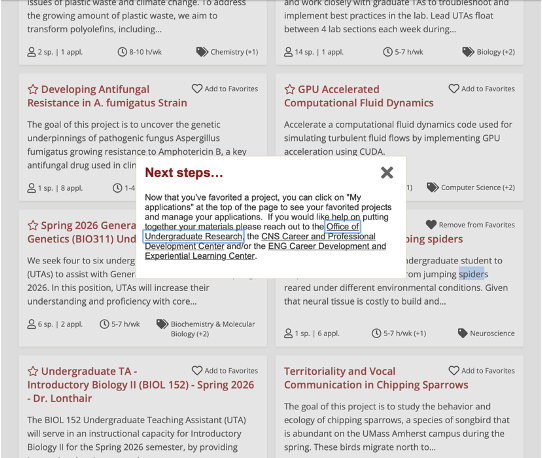
Once you "favorite" the project, the project will be moved to “My Application”, where you can see the field for the application essay:


- Write a 2-3 paragraph statement about your interest in the project. Use the resources available in the Office of Undergraduate Research and Studies (OURS), the CNS Career and Professional Development Center and the CoE Career Development and Experiential Learning Center to help write this section and the "About Me" section.
- Check to make sure you have updated and filled out the information and transcript in your profile and uploaded required documents.
- When you click "Submit application", you will see confirmation that you have successfully submitted your application to the project. You can withdraw your application after you've submitted it.
- You can edit your essay and profile anytime until the application period closes by withdrawing the application and then resubmitting.
Why are there application limits?
The application limit is designed to encourage you to really think about the projects you're interested in, rather than just applying to all of them. To help with strategizing, PROPEL provides a cool feature with which you can see how many students have applied to a project and how many spots are available in that project. That way, you can both apply for “dream” projects that may be particularly competitive as well as projects with fewer applicants and better odds.
You can only apply to 5 projects, but you can make your profile available to all mentors
While you must be selective in choosing projects, we are aware that many students would value experiences in other projects as well. Some mentors maybe looking for additional students. If you would like for Mentors who are not part of the 5 projects you selected to view your Profile. Go to your Profile. Click "Edit" and check "Share my information with all Mentors"
I have been accepted to more than one project, what should I do?
You should treat being accepted to a position as an "offer" and communicate directly with mentors. Once you decide which mentor/project you want to work with, it is professional etiquette to contact the mentor whose project you are declining and thank them for their time and offer.
Transcript and Resume FAQs
How do I get my unofficial transcript?
Unofficial transcripts are fine for use in PROPEL. You can get an unofficial transcript through SPIRE. The steps are as follows (click to see step by step instruction):
1) Log into SPIRE and click on the Academic tile. 2) Choose Transcript Request under the General Academic Info section. 3) Under “Unofficial Transcript”, click "View Unofficial Transcript". 4) You can now view or print your unofficial transcript." For additional information, please visit University Registrar.
- First year students in their first semester should upload their unofficial transcripts; it will show the list of courses they are taking. You do not need to upload your high school transcript.
Do I need a resume to apply to PROPEL projects?
The PROPEL platform does not require a resume for applications. However, individual mentors may specify in their project details if a resume is needed. Always review the specific requirements listed for each project before applying.
How do I upload a resume if a mentor requests one?
You can upload your resume to the "Additional Documents (e.g. Resume)" field of their profile, located directly below the "Transcript" field.
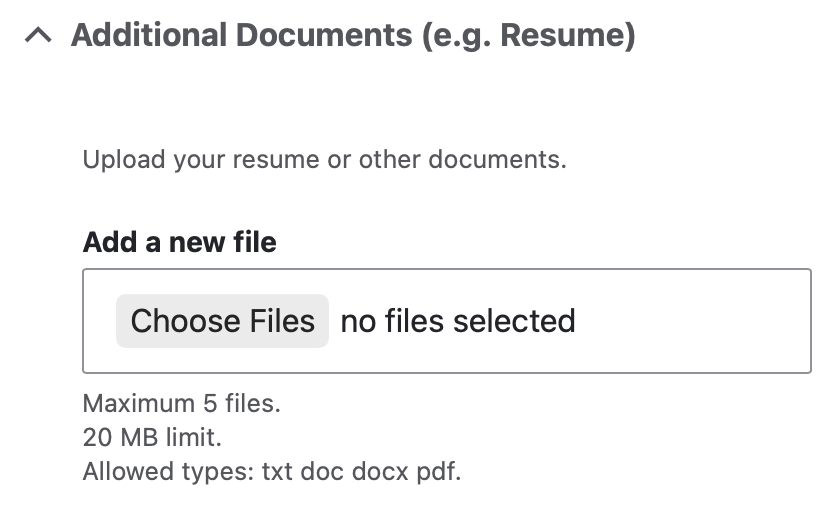
This field can be used for any other application documents required by the PROPEL project to which you are applying.
Sample Resumes by College and Resume Support
Find sample resumes from your college on the OURS website by following these steps:
- Go to the OURS website and click on "OURS Canvas Research Readiness Workshop," enroll in the Canvas workshop.
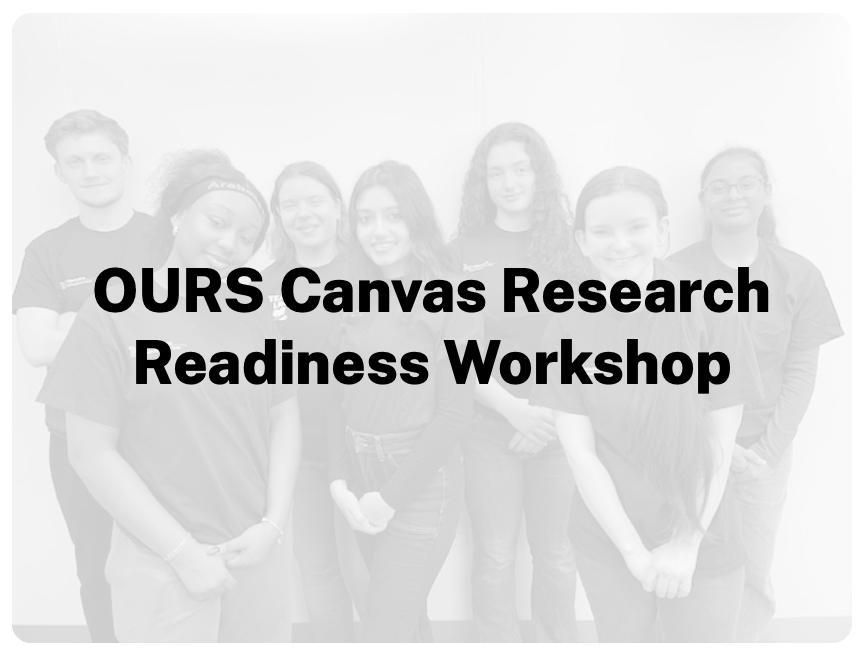
2. On the Canvas main page, scroll down to the "Resources" section.

3. In "Resources," you will find all the resume samples:

4. Need help with your resume? Just go to the next section!
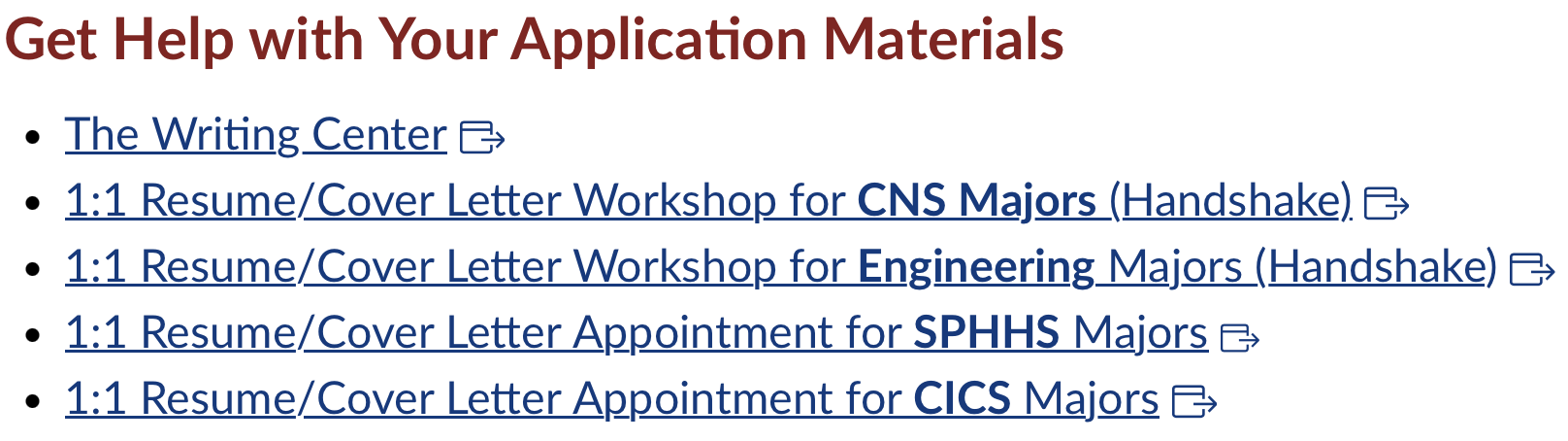
How to Write the "About Me" Section and Application Essay for PROPEL
* The samples below are meant to give you a clearer sense of how to approach your “About Me” section and essay. Use them for inspiration, and write a thoughtful response that’s genuinely your own.
1. The "About Me" Section Guidelines
- Your "About Me" is visible to all mentors using PROPEL and is part of your application.
- Keep it to one cohesive paragraph.
- Include a few personal details drawn from your experiences and interests.
- Add information or context not already covered in your resume or main essay.
- Highlight your motivation and, more importantly, your curiosity about the specific research projects.
- Show that you understand the field by explaining how you’ll translate your passion into concrete actions or plans.
1-1. Sample "About Me" Statements
Sample 1 (First Year)
I am [name], a XX year psychology major under the commonwealth honors college. I have always had an affinity toward clinical psychology. A key reason for this is my curiosity about various psychopathological conditions and the diverse factors that can lead to their development. The opportunity to apply the ever-emerging findings on treatments, assessments, and formulations of several mental health concerns drives me toward building a career in this field. Additionally, I have always enjoyed communicating and understanding the differences in people. To be able to combine my passion for observing human interaction with a job that allows me to help people better adapt to their mental battles would be enriching.
Sample 2 (First Year)
I am incredibly interested in [name of lab]’s work, both as a paid position and as an independent study project. I find [general lab topic] compelling, and studying [specific lab topic] would be worthwhile enough as is. However, the opportunity to [niche-specific lab topic interest] is beyond what I could have hoped to research in my freshman year.
As a freshman beginning university, I do not yet have experience working in a university-level lab. However, once I learn the necessary skills, I am more than happy to work independently on projects. I hope to work in a lab like [name of lab] that encourages this independent exploration and thought. If I were accepted into this project, I would love to hone the skills I learn and work on more projects with [name of lab] throughout my years at university.
Sample 3
Research offers an opportunity to challenge what is known and seek answers to shift perspectives. I am inspired by how research is a way to discover the new, learn from it, and then go on to translate findings into impactful applications, and I aspire to be part of this growing community during my time at UMass Amherst. This process fascinates me and involvement in undergraduate research would allow me to dive deeper into topics I only have gotten a chance to learn about in courses. The dynamic nature of research and its duality in structural and creative approaches sparks my curiosity and as I prepare to navigate a career in science and healthcare, the technical and interpersonal skills these positions will expose me to will serve invaluable.
Sample 4
As an undergraduate I’ve taken courses such as ______________, where I isolated bacteriophages from soil samples. Throughout the semester, I gained several laboratory skills such as culturing bacteria, writing up my results and presenting. This experience has inspired me to further pursue research and a project of my own because of the excitement I got from potentially discovering something new from my experiments. I would like to continue asking questions and applying the theory I learned in class to a research project. The experience I would gain from a research project would teach me valuable skills that I can take with me after graduation and into graduate school, as I hope to pursue a PhD in the future. I want to learn not only technical skills required for lab work, but also ways to be critical about the research literature I read and improve upon my interpersonal skills as I collaborate with labmates.
Sample 5
As a biochemistry and psychology major, I am deeply interested in understanding the intersection between scientific research and health outcomes. Courses such as _____________allowed me to explore molecular precision as I learned how to culture bacteria and report my results to my peers. I hope to expand on this skillset, while using my background in psychology to further understand the molecular basis behind prevalent diseases in different populations.
I am comfortable with basic laboratory skills such as gel electrophoresis, titrations and centrifugations. I have also had experience with excel to analyze clinical data. For skills that I have not yet learned, I am eager to gain exposure and apply them to my research project. As an aspiring physician, I believe that these skills of precision and responsibility are ones I can carry throughout my career.
Sample 6
I’m studying Computer Science at UMass Amherst, driven by using computational methods to solve complex, real-world problems. I’m especially interested in machine learning, data science, and AI—using data to uncover meaningful patterns and insights. What excites me about CS is how transferable its core ideas are: the same algorithmic thinking behind a recommendation system can be applied to modeling student learning or analyzing physical processes. I’m seeking research experience that goes beyond coursework, where I can design experiments, build systems, and learn how open questions become testable technical contributions. I also learn best through collaboration and want to contribute my programming and analytical skills while learning from faculty mentors and peers with different perspectives. Ultimately, I hope to deepen my understanding of the research process, strengthen my technical problem-solving, and explore areas I may pursue in graduate study or advanced technical work.
2. Application Essay Guidelines
- The application essay should be 2-3 paragraphs long, written specifically for each project (some projects may ask specific questions). Remember, a desire to learn and commitment to the position is valued over prior experience.
- Do not include your name in the essay, or contact the respective mentor to maintain an initial “blind stage” of the application process.
- Investigate the project and the research group to have a basic understanding of their research focus, methodology, and overall work. Express how your particular interests and skills match the project. Be specific and relatable. The mentors and their research group may have their own website, or their work are likely to be found online.
- Keep in mind that research mentors can extend beyond principal investigators or professors. These mentors may include graduate students, postdocs, visiting scientists, lab coordinators, or research administrators. If a project lists a mentor within a principal investigator’s lab, consider researching that specific mentor’s role and research focus within the primary lab.
- Remember, a well-crafted essay that reflects your genuine interest and alignment with the project can significantly improve your application. Best of luck!
2-1. Application Essay Samples
Sample 1 (First Year)
I am incredibly interested in (name of lab)’s work, both as a paid position and as an independent study project. I find (general lab topic) compelling, and studying (specific lab topic) would be worthwhile enough as is. However, the opportunity to (niche-specific lab topic interest) is beyond what I could have hoped to research in my freshman year.
As a freshman beginning university, I do not yet have experience working in a university-level lab. However, once I learn the necessary skills, I am more than happy to work independently on projects. I hope to work in a lab like (name of lab) that encourages this independent exploration and thought. If I were accepted into this project, I would love to hone the skills I learn and work on moreprojects with (name of lab) throughout my years at university.
Sample 2
My curiosities have drawn me to this research environment, aligning with my long-term goal of pursuing research. The chance to conduct an independent research project over an extended period, guided by mentorship, would allow me to learn experimental design, strengthen my computational literacy, and advance my ability to communicate complex scientific ideas. My past experiences being a teaching assistant in cellular and molecular biology, and leading science communication initiatives at a non-profit organization has strengthened my ability to collaborate effectively in fast-paced, interdisciplinary environments and translate complex science for a broader audience.
My collaborative nature and academic background has built up my ability to participate in experiments, interpret data, and think critically about the mechanisms that shape human health. Ultimately, I am certain it would allow me to grow to my full potential as a researcher who strives to learn and further this community by engaging in scientific dialogue.
Sample 3
I'm drawn to [Project Name] because [specific reason tied to what the project is actually investigating]. I've been curious about [related topic/question] through my coursework and personal exploration, and this project feels like a natural next step in digging deeper into that space. After looking into [mentor/lab name]'s work on [specific paper, method, or research direction], I was particularly interested in [something concrete about their approach or findings], and I'd love the chance to contribute to that effort while learning the research process from the inside.
What I'd bring to this project is a solid foundation in [relevant coursework or skills, e.g., data structures, Python, statistical analysis] and, more importantly, a genuine willingness to learn whatever the work demands. I understand that research rarely follows a straight line, and I'm comfortable with the ambiguity of working through problems that don't have obvious answers yet. Whether that means learning a new tool, reading papers to get up to speed, or running experiments that don't go as planned, I'm ready to put in the work and stay engaged through the messy parts.
Ultimately, I see PROPEL l as a chance to understand what CS research really looks like day to day and to figure out whether this is a path I want to pursue long term. I'm excited about the possibility of working with [mentor/research group] and contributing meaningfully to [brief restatement of the project's goal]. I'm committed to showing up consistently, asking good questions, and making the most of the opportunity.
Sample 4
I would like to join the XXX lab for a variety of reasons. Firstly, I find it particularly interesting since it focuses on emotion regulation and its effects on _______and various __________ behaviors. This aligns with my curiosity to learn more about the role and degree to which fluctuations in our mood can lead to the development of chronic ______ issues over time.
Additionally, I find the lab’s efforts to refine the _______model through employing various treatment methodologies quite exciting. An opportunity to observe and learn the framework they use to streamline DBT would provide me with a window to learn about the clinical application of such therapy methods and the degree of their effectiveness.
Lastly, I truly enjoyed reading Dr. XXs paper from on the use of text screening to model xx ideation. It caught my eye since it is one of the few studies I have read that take into consideration one of the biggest factors that influences our daily activities and mental health today—mobile phones. I found the use of specific word categories to track xx ideation interesting. If given an opportunity, I would love to learn how to develop such methods of research that ensure that even minutely influencing factors (like the word category just focuses on ____) is taken into consideration.
Sample 5
I am very interested in the work being done in [name of lab]. The lab’s focus on [broad lab topic] strongly resonates with my academic interests, especially my curiosity about (specific lab topic/ lab technique if any). During a summer internship, I performed basic laboratory techniques such as gel electrophoresis and spectroscopy, which introduced me to the level of precision, troubleshooting, and attention to detail required in a lab setting. That experience helped me better understand how experimental techniques can be used to investigate complex biological questions, and it motivated me to pursue further hands-on research opportunities in a more rigorous academic environment.
My interest in research is closely tied to my long-term goal of pursuing medicine. I am interested in connecting [lab topic] to the clinical relevance of health outcomes, and hope to build my skills in the collaborative and intellectually engaging environment of [lab name]. If given the opportunity to work on this [lab project], I am very interested in learning more laboratory technique and refining my abilities as a researcher.
Recommender FAQs
Who should I list as a Recommender? What if I'm a first year student?
- Recommenders are people who know your work (and work ethic) well. Typical recommenders are either instructors, advisors, or previous research mentors. It is a good idea to contact recommenders in advance to make sure they are willing to answer questions from potential PROPEL mentors.
- If you don’t have any recommenders from campus, you can contact past employers. First year students may also use their high school teachers.
How will my recommender be contacted?
Not all project mentors request recommendation letters. We ask for your recommender’s information in case project mentors need to verify details or seek additional insights. Please provide accurate contact information for a recommender who can speak to your qualifications.
Does my recommender need to submit anything?
No, your recommender doesn't need to submit anything. The name and email address of your recommender will be sent to the mentors whose project you apply to. The mentors individually will decide on whether they would like to contact your recommender or not, and what information they would like to request from your recommender.